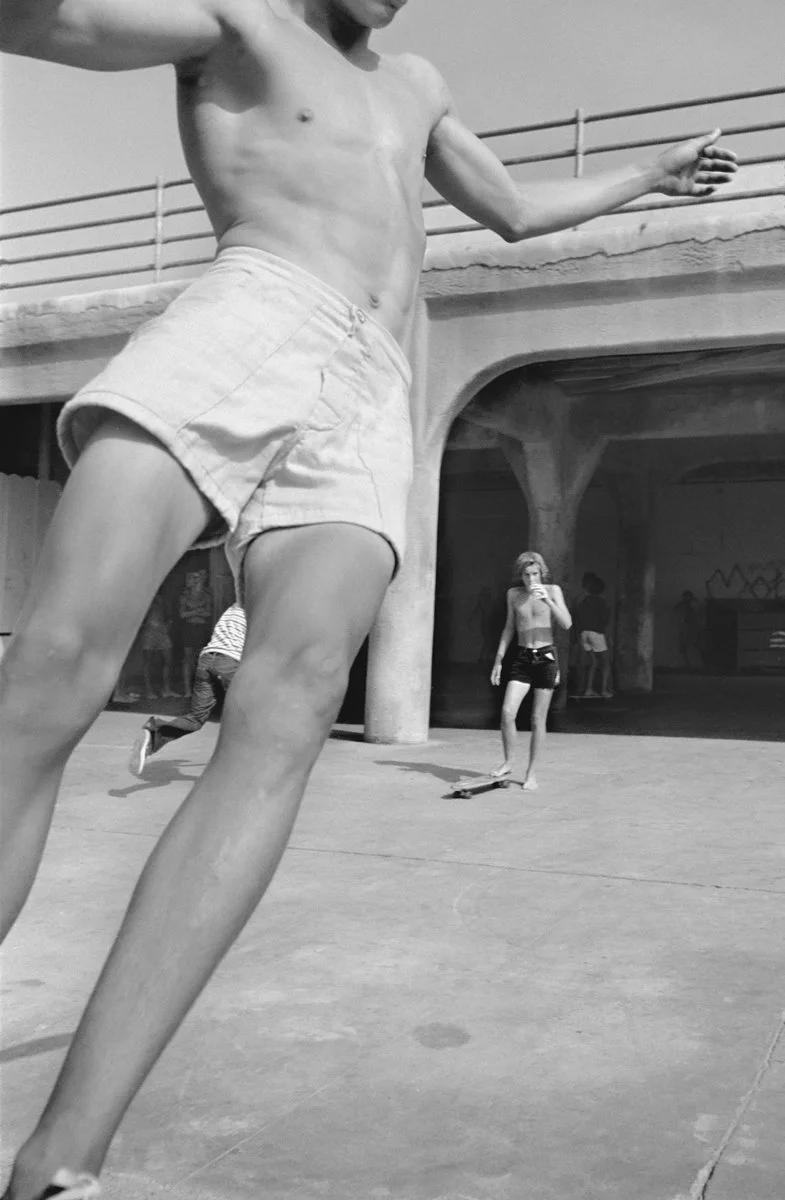
ICON : ITW HUGH HOLLAND

Why is it always the same? Why is it that every time someone irresistibly draws me in, they live outside the system? The answer is perhaps simple and always the same: these people approach things differently. They are not victims of a stereotyped education and are willing to overturn the table if the rules don’t suit them, to create a world in which they would want to exist.
I say this, but I feel like I’m speaking about myself. Yet here, I’m talking about Hugh Holland. A master who recently left us, and whose last words I had the privilege of capturing. He was there before everyone else, doing what everyone today merely repeats—or rather, copies and pastes onto their mood boards.
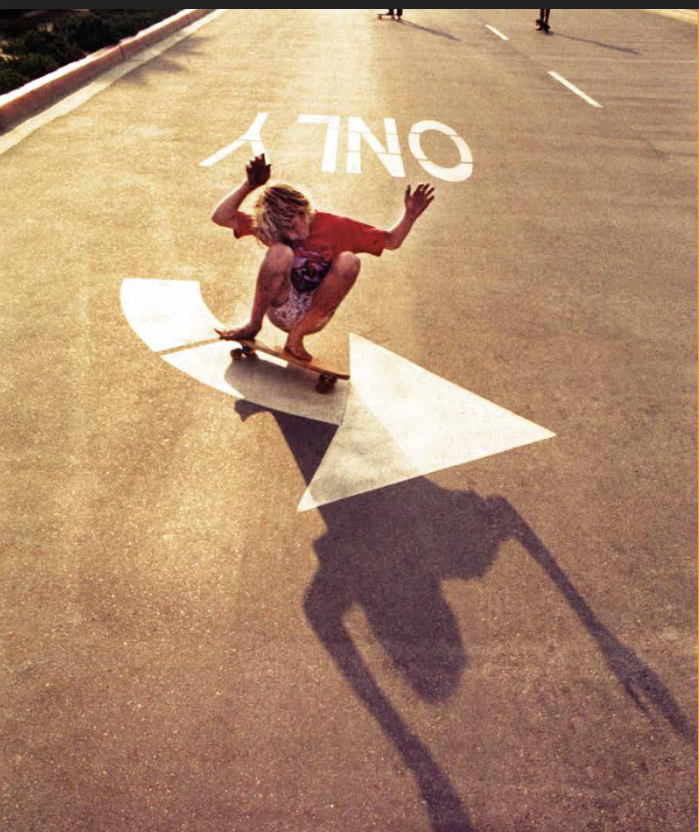
Now imagine a world before the inspiration supermarkets that are Pinterest and the like. A world where, to create, you had to face the unknown. In the early 70s, a young man named Hugh saw these skateboarders on his way to work. He had some knowledge of photography, and in just three years, what he was about to do would revolutionize the course of photography history—or at least, revolutionize my world.
Without him, I wouldn’t be here. Without him, we wouldn’t have proof that another world was possible. Until society came along and ruined everything. But that, you already know.
Sebastien Zanella: Before photographing skateboarders, who influenced you? Who were your inspirations?
Hugh Holland: A French street photographer from the 1930s... What was his name again? Oh yes, André Breton.
Sebastien Zanella: What’s interesting is that photographers at the time generally used 35mm cameras with wide-angle lenses. But you were already working in a very close-up approach. Few people did that back then.
Hugh Holland: Yes and no. I also mainly used wide-angle lenses. My primary lens was a 28mm mounted on a 35mm body. Later, I used an 18mm, even wider. But I also experimented with different focal lengths: a 45mm and even a telephoto for portraits.
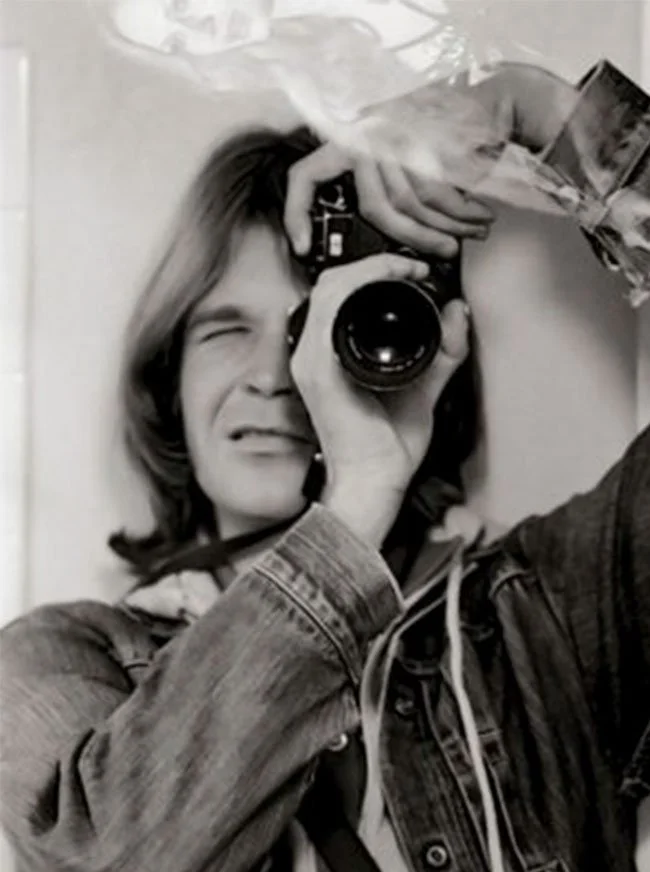
Sebastien Zanella: You were using a Pentax, right?
Hugh Holland: Yes, I started with a Pentax because that was the camera I had. I only photographed skateboarding for three years: 1976, 1977, and 1978.
Sebastien Zanella: And then you stopped?
Yes, I’m not sure exactly why. I felt like skateboarding was changing completely. When I was photographing, skaters were everywhere, barefoot, shirtless. It was a raw, spontaneous scene. But after three years, everything changed. Logos started appearing, skaters began wearing branded T-shirts. Everything became more structured, more commercial. It wasn’t the same anymore for me, and I lost interest.
Sebastien Zanella: What’s fascinating is that your approach was very instinctive. Even today, few photographers dare to capture skateboarding in such a way. Many remain timid or hesitate to get as close to their subjects.
Hugh Holland: At the time, it was new for them too. They were happy to be photographed. They would perform tricks for me, pose naturally—there was a real connection.
Sebastien Zanella: After you stopped photographing skateboarding, what did you do?
Hugh Holland: I just went back to street photography, capturing a bit of everything, without a specific subject. In recent years, I’ve been shooting much less. It’s been a long time now… But I still have my camera, though today, I mostly use my phone.
Sebastien Zanella: What’s unique about your work is that you never shifted toward a journalistic approach to skateboarding. You always put aesthetics first. Few photographers of that era made that choice.
Hugh Holland: Yes…
Sebastien Zanella: You were older than them when you photographed them, right?
Hugh Holland: Yes, I was 30 at the time. And they were between 15 and 18.
Sebastien Zanella: Did you spend a lot of time with them?
I had a full-time job. I worked in a custom furniture finishing workshop in West Hollywood. So I could only shoot after work. That’s why many of my photos are taken at dusk. I loved how the air, the colors, everything changed at that time.
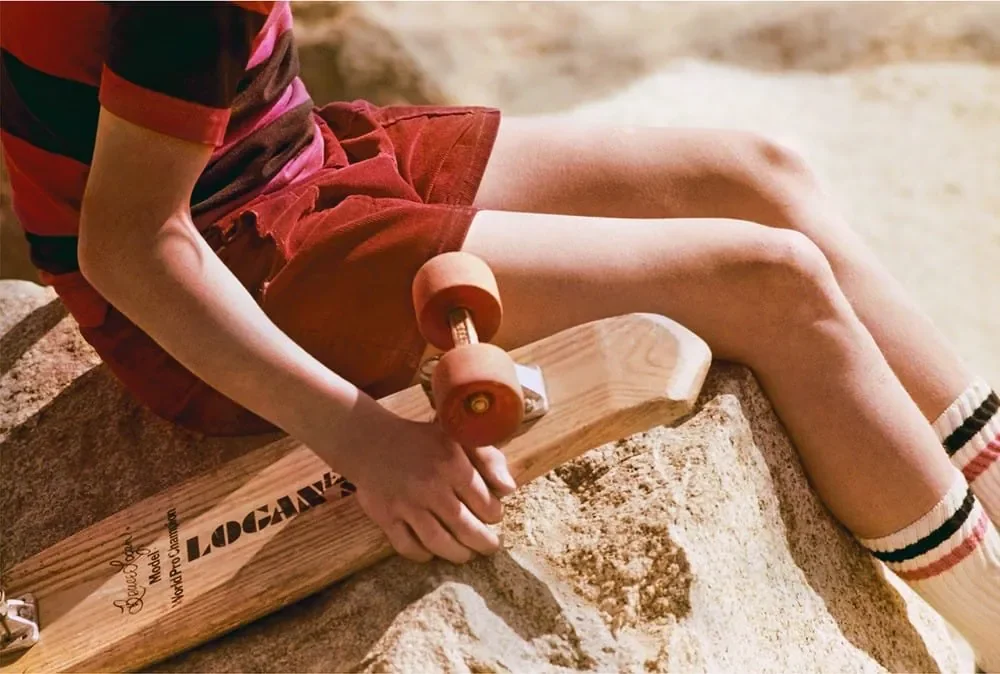
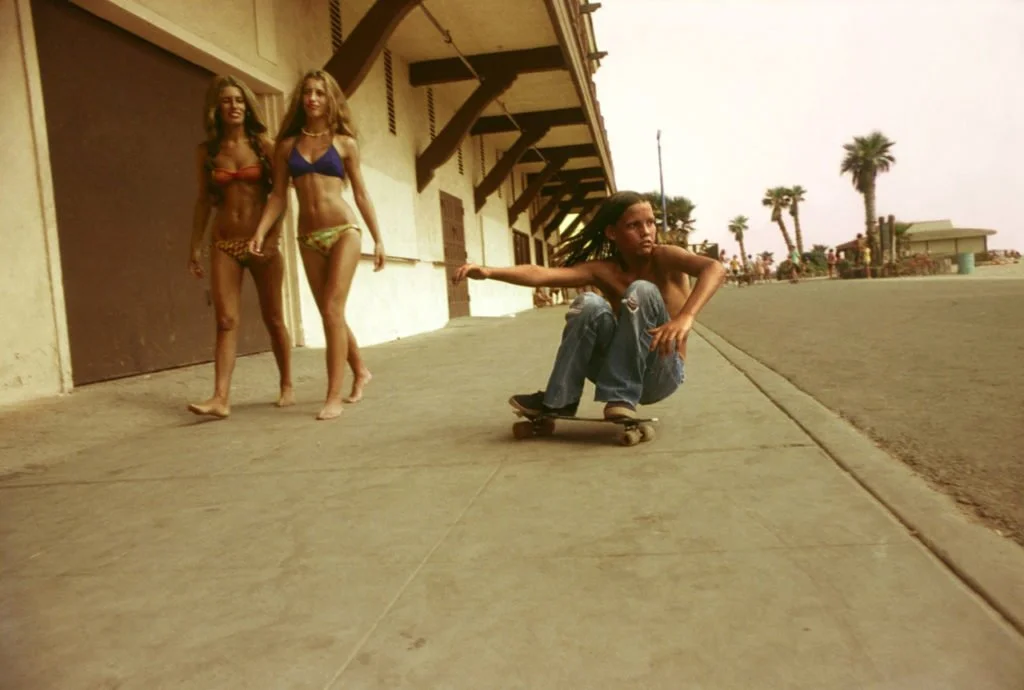
Sebastien Zanella: Which gives them a unique and beautiful light. At that moment, did you have a deep photographic culture, or was it purely instinctive?
Hugh Holland: I was doing action photography in general, not just skateboarding. I photographed people walking, running… I experimented. The right composition suddenly appears. You have to be ready to capture it instantly. I always say I don’t take pictures, I make them. The images are given to me. My job is to make something out of them.
Sebastien Zanella: A kind of intuition, anticipation?
Hugh Holland: Yes, especially with skateboarders. In a pool, they would repeat the same movements over and over. That allowed me to identify the key moment and capture it at just the right time—when they reached the peak, when they took flight.
Sebastien Zanella: When you did a sunset session with skaters, how many rolls of film would you use?
Hugh Holland: Usually five or six rolls per session.
Sebastien Zanella: So about 500 photos?
Hugh Holland: Yes, something like that. Back then, a roll contained 36 images.
Sebastien Zanella: When was your work rediscovered? You left skateboarding in the late ‘70s, but when did your work come back into the spotlight?
Hugh Holland: That happened much later. For a long time, no one was interested. But about 15 or 20 years ago, in the 2000s, people started rediscovering my photos.
Sebastien Zanella: How did that happen? Did someone approach you asking to see your images?
Hugh Holland: Yes, a friend of mine, George Mitchell. He came back to me, and I started showing him my prints, my books… He played a role in that rediscovery.
Sebastien Zanella: What’s fascinating is that every time you see one of your photos, you remember taking it. You still feel the wind, the light, the exact moment.
Hugh Holland: Yes, I remember every instant.
Sebastien Zanella: You’re working on a new book, which means you still have a lot of unpublished images?
Hugh Holland: He has tons of boxes full of slides. Thousands of images that have never been published.